Electric SUVs in 2026 How Battery Technology and Consumer Demand Are Transforming the SUV Market
Electric Vehicles
|
April 15, 2026
Electric SUVs have become one of the fastest-growing segments in the global automotive industry, combining the practicality of traditional sport utility vehicles with the efficiency and lower emissions of electric powertrains. As automakers continue expanding their electric vehicle portfolios, SUVs have emerged as a key category because they align with consumer preferences for spacious interiors, versatile designs, and everyday usability.
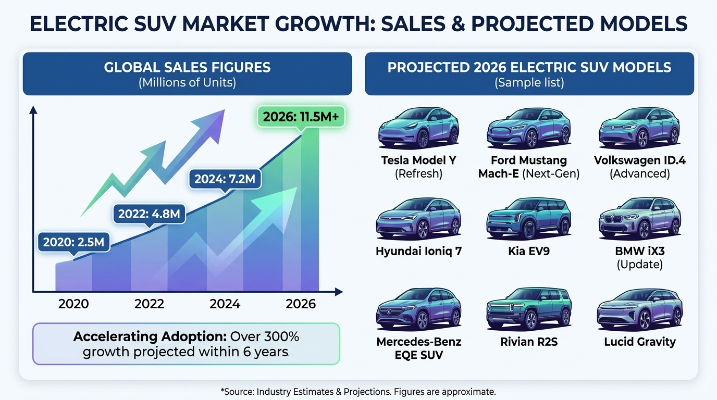
By 2026, the electric SUV market is expected to include a wider range of options, from compact urban crossovers to large family-oriented models and premium performance vehicles. The growth of this segment reflects broader changes in transportation, including advances in battery technology, expanding charging infrastructure, and increasing competition among global automakers.
Rather than simply replacing gasoline-powered SUVs, electric SUVs are reshaping how consumers think about vehicle design, performance, and ownership. Their development represents a major step in the transition toward a more electrified automotive future.
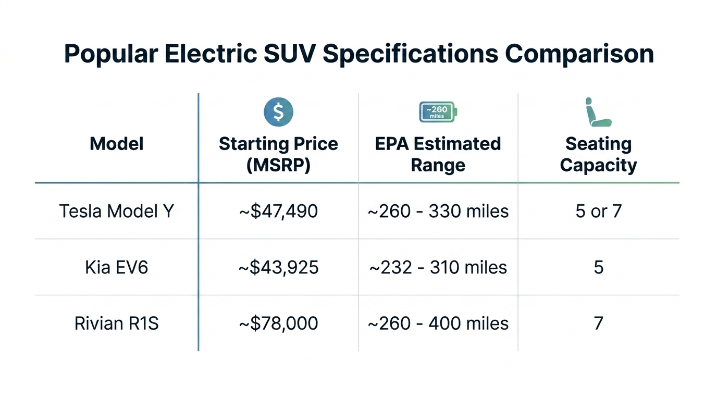
An electric SUV is a sport utility vehicle powered entirely by battery electricity rather than an internal combustion engine. These vehicles use large battery packs and electric motors to provide propulsion while producing no direct tailpipe emissions during operation.
Electric SUVs generally fall into several categories based on size, design, and intended use.
Compact Electric SUVs
Compact electric SUVs are designed primarily for urban drivers and small families. They typically prioritize efficiency, easier maneuverability, and practical daily transportation.
These models often appeal to consumers who want the higher seating position of an SUV while maintaining a smaller footprint.
Midsize Electric SUVs
Midsize electric SUVs represent one of the most competitive segments in the EV market. They offer a balance between passenger space, driving range, and everyday versatility.
This category includes many popular electric models because it meets the needs of families and long-distance drivers.
Large and Three-Row Electric SUVs
Large electric SUVs focus on passenger capacity, cargo flexibility, and utility. These vehicles are designed for larger families or drivers who require additional interior space.
As battery technology improves, more manufacturers are introducing larger EVs capable of combining practicality with electric performance.
Comparing electric SUVs requires evaluating more than just purchase price or driving range. Several factors influence how suitable a vehicle may be for different driving situations.
Battery Range and Efficiency
Driving range remains one of the most important considerations for EV buyers. However, advertised range can vary depending on several factors, including:
- Driving speed
- Weather conditions
- Wheel size
- Passenger and cargo load
- Use of climate control systems
A vehicle with a higher range rating may not always provide better real-world efficiency if it uses a larger and heavier battery pack.
Modern electric SUVs are increasingly focusing on improving battery efficiency rather than simply increasing battery size.
Charging Speed and Infrastructure Availability
Charging capability plays a major role in the overall EV ownership experience.
Electric SUVs are evaluated based on:
- Charging speed
- Charging connector compatibility
- Access to public charging networks
- Home charging convenience
The continued expansion of fast-charging infrastructure is helping reduce concerns about long-distance EV travel. Industry-wide adoption of charging standards is also improving compatibility between vehicles and charging stations.
Interior Space and Practicality
SUV buyers often prioritize flexibility, and electric models are expanding the possibilities of interior design.
Because electric vehicles do not require traditional engine layouts, manufacturers have more freedom to optimize cabin space. Many electric SUVs offer:
- Flat cabin floors
- Flexible seating arrangements
- Additional storage areas
- Large cargo compartments
These design advantages allow EV manufacturers to create practical vehicles for families, commuters, and outdoor-focused drivers.
Electric powertrains provide unique performance characteristics compared with traditional gasoline engines.
Instant Electric Torque
Electric motors deliver power immediately, allowing many electric SUVs to achieve quick acceleration without traditional transmission systems.
This performance advantage has encouraged manufacturers to develop EVs that combine practicality with sporty driving characteristics.
Improved Driving Dynamics
Because battery packs are typically positioned low within the vehicle platform, electric SUVs often benefit from:
- Lower center of gravity
- Improved stability
- Balanced weight distribution
These characteristics can enhance handling and overall driving comfort.
The expanding EV SUV market reflects different consumer priorities.
Urban Transportation
Compact electric SUVs are well suited for city environments because of their smaller size, efficiency, and convenient charging options.
Family Transportation
Family-focused electric SUVs emphasize:
- Passenger capacity
- Safety technology
- Cargo flexibility
- Long-distance comfort
Outdoor and Adventure Use
Some electric SUVs are designed with increased durability, all-wheel-drive capability, and towing features to support outdoor activities.
Luxury and Performance
Premium electric SUVs compete through advanced technology, refined interiors, powerful electric motors, and sophisticated driver assistance systems.
While electric SUVs offer several advantages, ownership involves important considerations.
Operating Costs
Electric vehicles generally have fewer moving parts than gasoline vehicles, which may reduce certain maintenance requirements. Energy costs can also be lower depending on electricity rates and driving patterns.
However, factors such as purchase price, insurance costs, and battery-related expenses should also be considered.
Charging Availability
Charging access remains an important factor in EV adoption.
Drivers should evaluate:
- Availability of home charging
- Local public charging networks
- Typical daily driving distance
- Travel requirements
For many EV owners, home charging provides most daily energy needs, while public charging supports longer journeys.
Battery Technology and Long-Term Reliability
Battery development continues to influence the future of electric SUVs. Automakers are investing in improvements related to:
- Energy density
- Charging speed
- Battery lifespan
- Manufacturing efficiency
As battery technology advances, future electric SUVs may achieve longer ranges, lower costs, and improved ownership experiences.
The electric SUV segment is expected to remain a major focus of automotive innovation as manufacturers compete to develop more efficient, practical, and affordable models.
Future developments will likely focus on:
- Advanced battery technologies
- Faster charging solutions
- Improved vehicle software
- More efficient manufacturing
- Greater model diversity
As consumer demand shifts toward electrified transportation, electric SUVs are positioned to become one of the most important categories in the transition toward sustainable mobility.
The evolution of electric SUVs demonstrates how the automotive industry is moving beyond traditional vehicle concepts. Through continued innovation in batteries, design, and infrastructure, electric SUVs are helping redefine what modern transportation can achieve.
Related Posts
How Hybrid Vehicles Work Technology, Benefits, and Their Role in Electrification
Car Bluetooth Adapters A Practical Guide to Upgrading Your Car Audio Experience

6 Best Dash Cams With Night Vision and Parking Mode in 2026

How To Choose the Right Windshield Wipers for Your Car Model
Toyota Corolla 2026 Review Is It Actually Worth Buying for Budget Buyers?